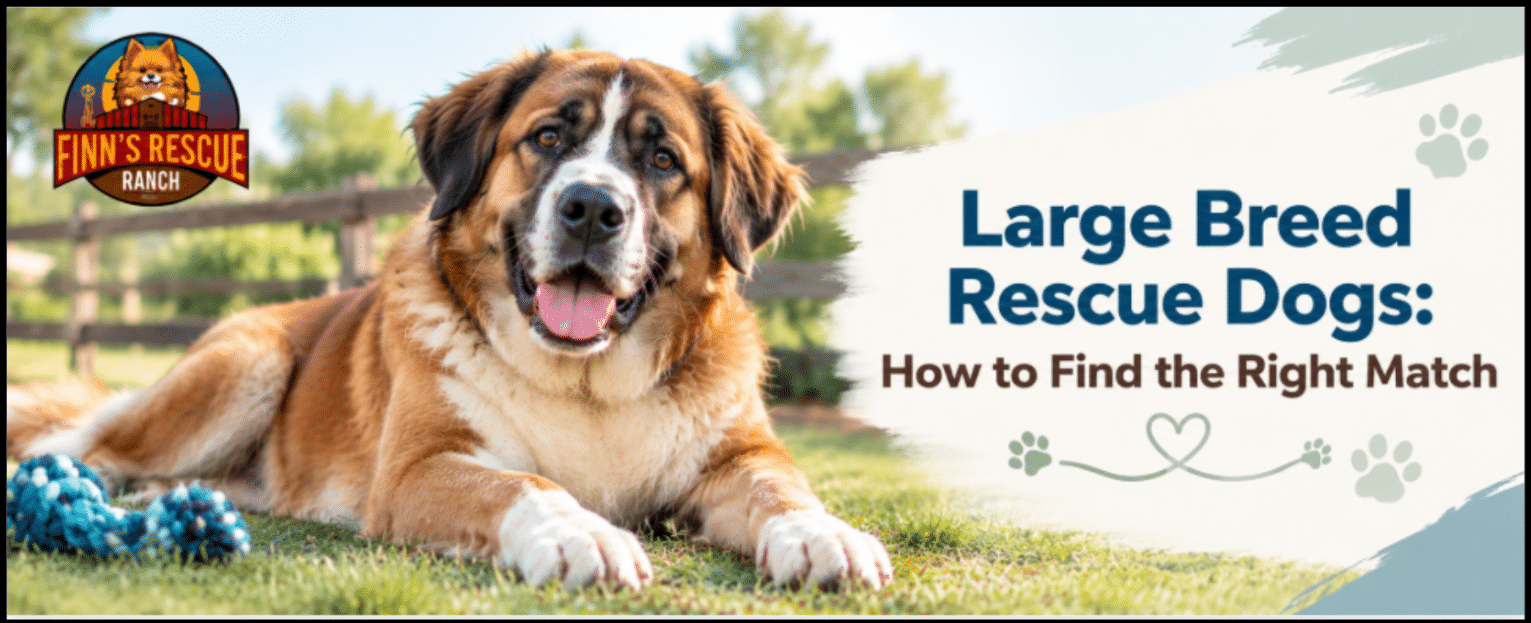

Searching for large breed rescue dogs available now can be an exciting first step toward welcoming a new companion into your home. Large dogs can be affectionate, loyal, playful, and wonderful family companions, but their size is only one part of the adoption decision.
The best adoption match depends on several factors, including temperament, activity level, training, age, household routine, and the amount of time an adopter can provide for care and companionship.
For prospective adopters, the goal should not simply be to find a large dog. It should be to find a dog whose individual needs fit naturally into the household.
Table of Contents
Why Consider a Large Rescue Dog?
Rescue dogs come from different backgrounds, and every dog has its own personality and experiences. Some may be highly energetic and enjoy long walks or outdoor activities. Others may prefer a quieter routine and plenty of time with their people.
Large dogs can make excellent companions when their physical and emotional needs are understood and supported.
Adoption can also give a deserving dog an opportunity to move from temporary care into a stable home where it can build a long-term relationship with its family.
Organizations such as Finn’s Rescue Ranch focus on helping rescued dogs receive care and connect with suitable forever homes.
Look Beyond Size and Appearance
A dog’s size or breed type should not be the only factor considered during adoption.
Before choosing a dog, prospective adopters should learn about:
- Age and maturity
- Energy level
- Temperament
- Training experience
- Behavior around people
- Behavior around other animals
- Exercise requirements
- Medical or ongoing care needs
- Previous living environment
A large dog with a calm personality may have very different needs from a young, energetic dog of similar size.
This is why asking questions and learning about the individual animal can make the adoption process more thoughtful.
Is Your Home Ready for a Large Dog?
You do not necessarily need a huge property to adopt a large dog. What matters is whether your home and daily routine can accommodate the dog’s needs.
Consider your available space and whether there is a comfortable area where the dog can sleep and relax.
You should also think about practical factors such as:
- Secure doors and gates
- Appropriate sleeping space
- Suitable food and water bowls
- Safe walking equipment
- Transportation
- Exercise opportunities
- Household rules
If you rent your home, check any pet-size or breed restrictions before moving forward.
Consider Exercise and Mental Stimulation
Large dogs can have very different activity requirements.
Some may need substantial daily exercise, while others may be content with moderate walks and regular enrichment. Ask about the dog’s typical activity level before adoption.
A good routine may include:
- Regular walks
- Age-appropriate physical activity
- Interactive toys
- Basic obedience training
- Mental enrichment
- Quiet rest periods
Exercise is not only about physical health. Appropriate stimulation can also help a dog adjust to a new environment and develop positive household habits.
Training Matters
A large dog can be physically strong, so basic training is particularly useful for everyday safety and communication.
Adopters can establish simple expectations around:
- Walking politely on a leash
- Coming when called
- Waiting at doors
- Settling in a designated area
- Responding to basic cues
- Appropriate interaction with people
Positive reinforcement and consistency can help a dog understand what is expected without creating unnecessary stress.
Prepare Before Bringing Your Dog Home
Preparation can make the transition easier.
Before adoption day, have the essentials ready:
- Food and water bowls
- Appropriate food
- Collar and identification
- Leash and walking equipment
- Comfortable bedding
- Safe toys
- Cleaning supplies
- A designated resting area
It is also helpful for family members to agree on household rules before the dog arrives.
Give Your New Dog Time to Adjust
A newly adopted dog may need time to understand its new surroundings.
During the first days, keep routines simple and predictable. Avoid overwhelming the dog with too many visitors or unfamiliar experiences.
Allow the dog to rest and gradually become comfortable with the household.
Families considering adoption can also review a rescue dog adoption checklist to help organize their preparation before bringing a dog home.
How to Choose Responsibly
When comparing large breed rescue dogs available now, avoid making a decision based solely on photographs or first impressions.
Instead, compare the dog’s characteristics with your actual lifestyle.
Ask yourself:
- Can I provide the required daily exercise?
- Can my household safely manage the dog’s size?
- Do I have time for training?
- Is the dog compatible with children or other pets?
- Can I provide long-term veterinary and routine care?
- Am I prepared for the adjustment period?
A thoughtful answer to these questions can help create a stronger foundation for adoption.
Frequently Asked Questions
1. Are large rescue dogs suitable for families?
They can be, depending on the individual dog’s temperament, energy level, training, and compatibility with the family.
2. Do large dogs need a large yard?
Not necessarily. Exercise requirements vary between dogs. Regular activity and mental enrichment are important regardless of property size.
3. What should I ask before adopting a large rescue dog?
Ask about temperament, activity level, training, behavior around people and animals, medical history, and ongoing care needs.
4. Are large rescue dogs difficult to train?
Not necessarily. Training needs vary by individual dog. Consistent, positive reinforcement can help establish good communication and household routines.
5. How long does a large rescue dog take to settle into a new home?
There is no fixed timeline. Some dogs adjust quickly, while others need additional patience and consistency.
Conclusion
Finding large breed rescue dogs available now is only the beginning of the adoption journey. The most important step is determining whether a particular dog’s personality, activity level, care requirements, and behavior are compatible with your household.
By asking questions, preparing your home, establishing routines, and allowing time for adjustment, adopters can create a more positive transition and give a rescued dog the stable environment it deserves.